
God has given us eyes to observe the world in which we live, and intelligence to grasp the magnitude of the crisis we face. He has also given us his Word (Psalm 19.8-15), to help us understand his heart and his will… He invites his people to take part in his mission of restoration and love.
160 pages, Paperback. First published February 1, 2008 An exposition of the theological reasons why Christians should care for creation.
This book explores the link between Christian faith and ecological responsibility. The author examines how believers can respond to the environmental crisis by drawing on biblical teachings.
The book emphasises that creation is a gift from God and that Christians have a key role to play in its preservation. Through personal reflections and practical advice, he invites readers to reorientate their lifestyles to live in harmony with creation, while remaining faithful to their faith.
Atria/One Signal Publishers (September 20, 2022) A climate scientist's realistic, soothing plea to tackle the climate challenge by giving ordinary people back their ‘power’ and hope.
This is a well-documented, accessible book, rooted in our real lives and which encourages us to react with hope to climate change! Yes, individually and together we can influence the course of events...
So what can we do?
Here you will discover a scientist who speaks with great humanity and whose optimism is contagious. She never ceases to encourage us to act, because every exchange on the climate, every small gesture counts, even if structural changes are also necessary...
Katharine Hayhoe is a Canadian climatologist and Christian. She gives lectures all over the world and her books for the general public call for realistic and effective solutions in favour of the climate. As Chief Scientific Advisor to The Nature Conservancy and Professor of Public Policy and Law at Texas Tech University, Katharine is one of the most influential voices in climate science. Her impact has been recognised worldwide. She is a recipient of the United Nations Champions of the Earth award, and one of Time Magazine's 100 most influential people.
Ed. Excelsis (avec A Rocha), 2025. What does it mean to faithfully cultivate and care for creation in a context of global warming, falling biodiversity and widespread environmental pollution? How can we love God the Creator, who has entrusted us with his masterpiece?
What does it mean to faithfully cultivate and care for creation in a context of global warming, falling biodiversity and widespread environmental pollution? How can we love God the Creator, who has entrusted us with his masterpiece? How can we love our neighbours who are suffering from the destabilisation of their environment as a result of our lifestyles?
Our ‘common home’ is in a bad way: a fire has broken out in the cellar, says the author. To help us see things more clearly, this book offers a spiritual diagnosis of the current environmental crises and gives practical suggestions for living out the dual commandment of love of God and love of neighbour, on an individual level, on the level of the Church and on the level of society in general.
Clément Blanc is pastor-planter of the Église évangélique du Plateau de Saclay (Paris region). He is also a trainer on creation care issues for the A Rocha association.

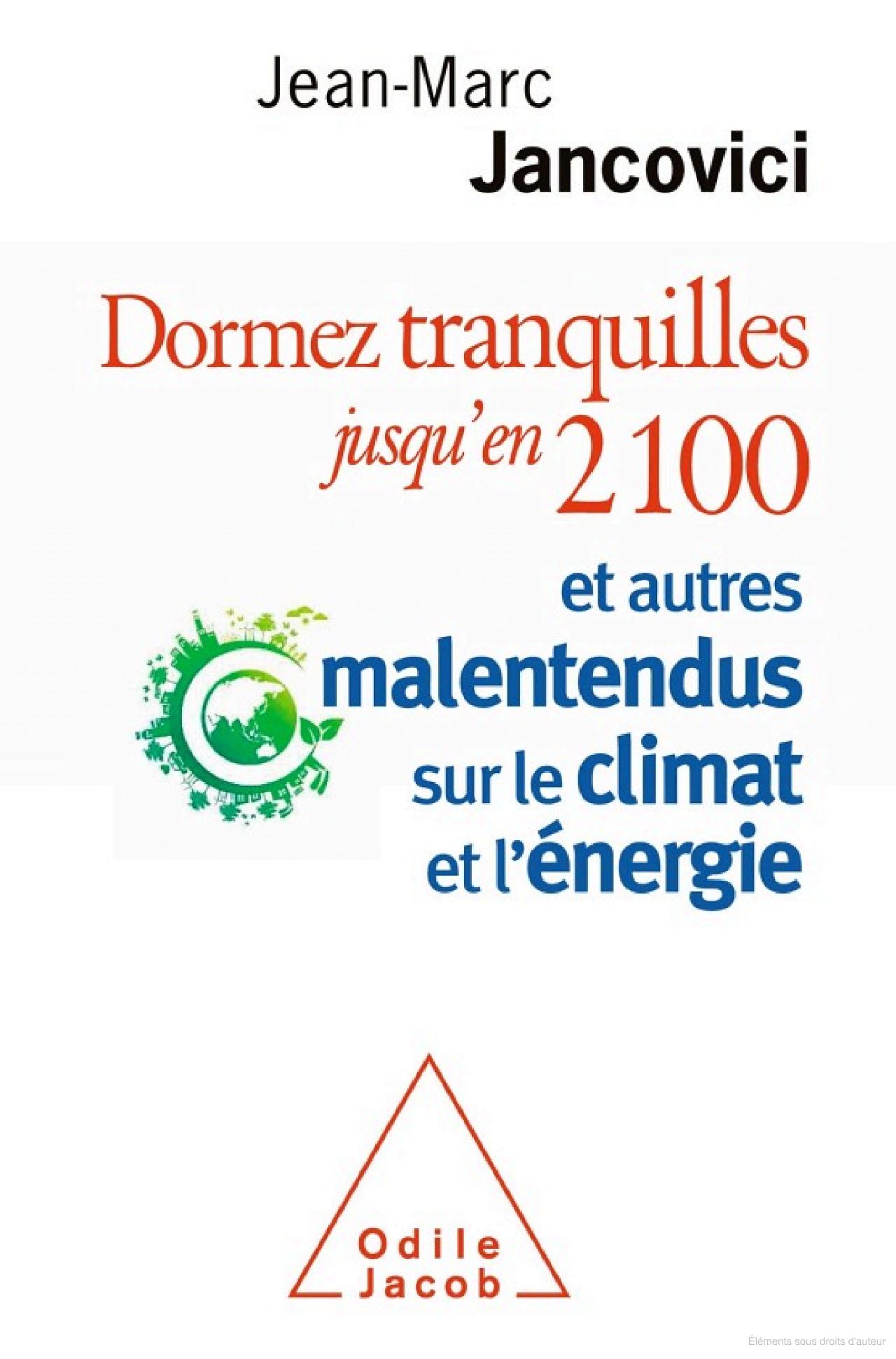
And other misunderstandings about climate and energy, Odile Jacob, 2015. What do we often forget when we analyse the state of the world? Energy resources. Not only are they the sinews of war, they are also the sinews of the economy and ecology.
What do we often forget when we analyse the state of the world? Energy resources. They are not only the sinews of war, but also of the economy and ecology. Jean-Marc Jancovici's lack of awareness of their crucial importance has prompted him to set out the “energy” side of the major issues that repeatedly make the headlines.
If you think that political extremism has nothing to do with our addiction to oil, that climate change will take time to really manifest itself, that nuclear power is not environmentally friendly, that Germany is an example to follow in terms of transition and that economic growth will inevitably return to finance what needs to be done, this book will surprise you and help you discover the hidden face of news that is too consensual to be ecologically honest.

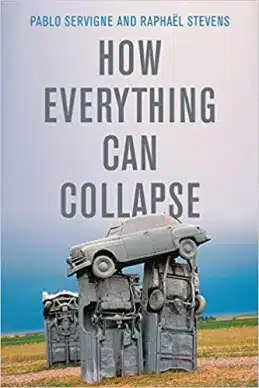
A short manual on collapsology for present generations.
What if our civilisation collapsed? Not in several centuries' time, but in our own lifetime. Far from Mayan predictions and other millenarian eschatologies, a growing number of authors, scientists and institutions are predicting the end of industrial civilisation as it has developed over the last two centuries. What are we to make of these gloomy predictions? Why has it become so difficult to avoid such a scenario?
In this book, Pablo Servigne and Raphaël Stevens unravel the forces behind a possible collapse and offer an interdisciplinary overview of this highly uncomfortable subject, which they call “collapsology”. By putting words to intuitions shared by many of us, this book makes the “crisis” phenomena we are experiencing more intelligible, and above all, gives new meaning to our times. Because today, utopia has changed sides: anyone who believes that everything can go on as before is a utopian. Collapse is the horizon of our generation, the beginning of its future. What will there be afterwards? All that remains to be thought out, imagined and lived...
Pablo Servigne is an agricultural engineer with a doctorate in biology. A specialist in collapse, transition, agro-ecology and the mechanisms of mutual aid, he is the author of Nourrir l'Europe en temps de crise (Nature & Progrès, 2014).
Raphaël Stevens is an eco-adviser. An expert in the resilience of socio-ecological systems, he is co-founder of the firm

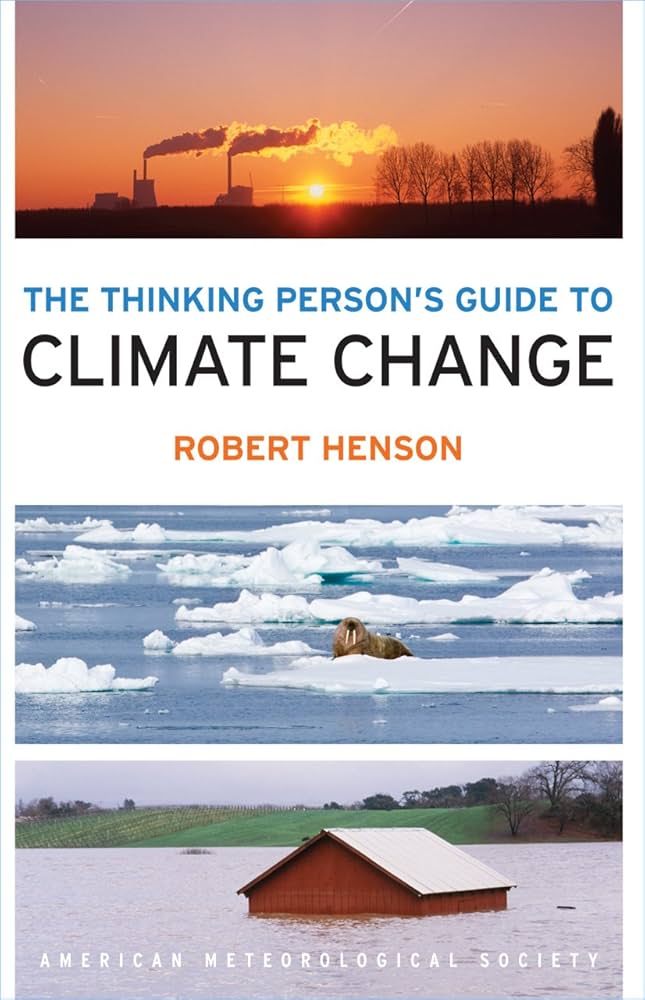
American Meteorological Society, 2019, several editions. A good summary for answering questions about climate science without having to read the IPCC reports.
This book explores the link between Christian faith and ecological responsibility. The author examines how believers can respond to the environmental crisis by drawing on biblical teachings.
The book emphasises that creation is a gift from God and that Christians have a key role to play in its preservation. Through personal reflections and practical advice, he invites readers to reorientate their lifestyles to live in harmony with creation, while remaining faithful to their faith.

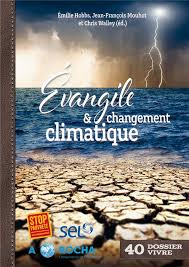
Dossiers Vivre, Je Sème / A Rocha, 2017. A collection of texts by various authors, the first book on climate change in the French-speaking world to be written by evangelical authors for an evangelical readership.
This book is important for two reasons. Firstly, climate change is a subject of extraordinary importance: a process apparently already underway could cause enormous and widespread damage, both to the global environment and to human lives. Secondly, this book presents a response to this challenge from the evangelical community in France and the French-speaking world.
Gospel and Climate Change is a reprise and extension of contributions given at a conference and seminar held on the occasion of the United Nations Climate Change Conference, COP21, in Paris from 30 November to 12 December 2015. Organised by the Christian nature conservation organisation A Rocha in partnership with the Lausanne Movement Network for the Safeguarding of Creation, the meetings were entitled ‘A Christian response to climate change’.
Contributors to the book were Henri Blocher (theologian), Max Boegli (engineer), Dave Bookless (theologian), Antoine Bret (physicist), Nicolas Fouquet (political scientist), Rachel Hauser (missionary), Émilie Hobbs (geographer), Jean-François Mouhot (historian), Aline Nussbaumer (marine ecologist), Dominic Roser (ethicist), Robert D. Sluka (biologist) and Chris Walley (geologist).
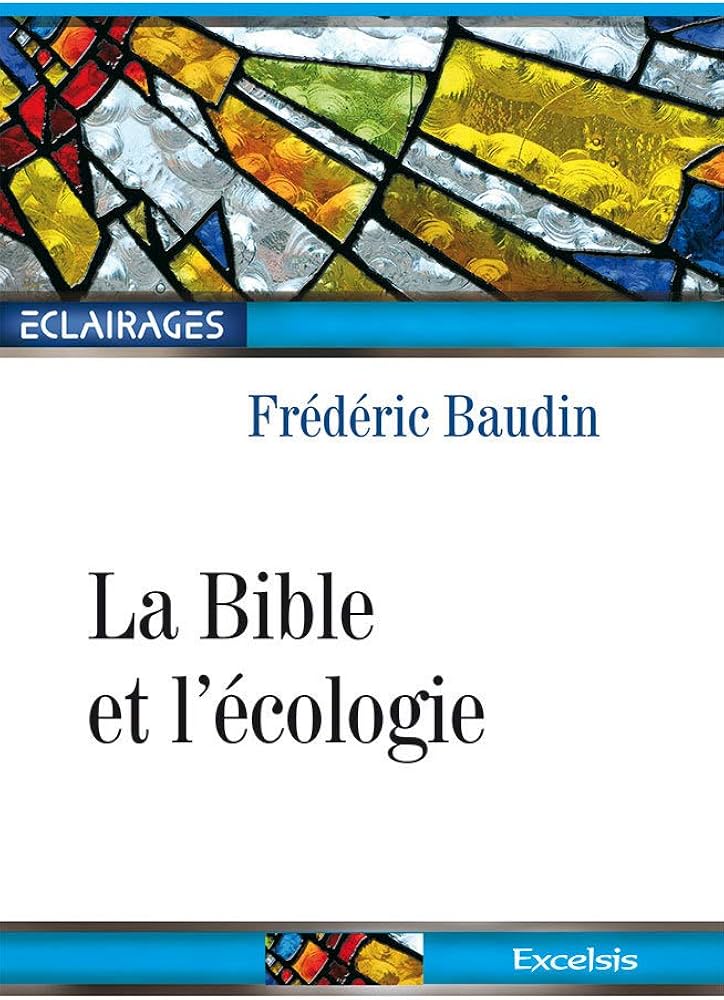
Ed. Excelsis (with A Rocha), 2021. Ecology: a very important and topical subject. What does the Bible have to say about it?
L
he environment: a subject that also arouses passion and debate. Is it possible to reach agreement? And how can we talk about it calmly, even if we don't all have the same approach?
This guide will help you to discuss environmental and ecological issues in the light of the Bible, in church and in small groups, using a number of studies, questions and food for thought.
Ed. Mennonites (with A Rocha), 2025. This collective book brings together the contributions made at the Jacques Ellul Day held at the Haute école de théologie in Saint-Légier (CH) in 2024, to mark the 30th anniversary of his death.
It has been said of Jacques Ellul (1912-1994) that he was the man who foresaw almost everything... Pandemics, GMOs, the ecological crisis, global warming, nuclear waste, transhumanism... he had seen these phenomena coming decades before, based on his thesis that technology leads the world - rather than economics and politics.
This collective book brings together the contributions made at the Jacques Ellul Day held at the Haute école de théologie in Saint-Légier (CH) in 2024, to mark the 30th anniversary of his death.
It includes a presentation of Jacques Ellul's thought, current applications - for example, in relation to artificial intelligence - mini-testimonies, the results of workshop discussions, prayers, etc. It will help you to understand today's world, to think about our technological societies, to become aware of deadly developments, but also to make the deliberate choice to hope in spite of everything. For Jacques Ellul was deeply religious, Protestant and “hopeful”... In some respects, he was the bearer of a prophetic message that is both challenging and enduring. A book to move hearts, Christians, communities, the social body...

Ed.Edifac-Excelsis, 2013. A concise book that sets out the ‘Christian mandate’ to care for creation, by a pastor and founding member of A Rocha France.
The Bible is rarely associated with ecology. And Christians have not always been known for their concern to protect the environment.
On the contrary! Under the pretext of better ‘dominating and subduing’ the earth, they have often exploited natural resources to no purpose. Some people even think that there's no point in saving our planet, which will one day be replaced by ‘new heavens and a new earth’... But what exactly does the Bible say on this subject? And has the coming of Jesus Christ into the world abolished the human mission to cultivate and care for the earth?
Frédéric Baudin is a pastor, writer and lecturer. He has a university education in ecology, theology and modern literature. A founding member of the Christian environmental organisation A Rocha France, he currently heads the Culture-Environnement-Médias association (CEM, www.cemfrance.org).
Ed. Mennonites, Dossier 1-2022 This book is the first work in French devoted to ‘collapsology’ for a Christian readership!
The idea of the collapse of our civilisation is all the rage. So what are we to make of it: should we ignore the “prophets of doom” or take them seriously? While Frédéric de Coninck believes that it is impossible to seriously predict the future of global societies, he also shows that major disruptions are underway (climate change, over-consumption of natural resources, loss of biodiversity, the enrichment of a minority, the technological divide, etc.), all serious threats whose outcome is uncertain.

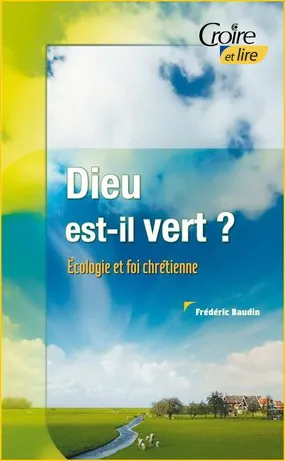
Croire-Pocket, Paris, 2007. Ecology is fashionable, but that's not a good enough reason to talk about it. Christians should have been among the first to speak out about the state of the ‘garden’ that God has entrusted to mankind.
Ecology is fashionable, but that's not a good enough reason to talk about it. Christians should have been among the first to speak out about the state of the ‘garden’ that God has entrusted to mankind. Unfortunately, they have often remained silent to do what everyone else has done. At best, they forgot that the Bible gave a point of view on this issue; at worst, they used it to justify their practices.
Frédéric Baudin leads us to take account of the ecological situation and the biblical message. If small streams make great rivers, let us be in no doubt that our seemingly simplest actions are essential if we want to be credible and not leave a huge dustbin to our children.
There is undoubtedly still time to take action. What is our responsibility in this process, and where will we find the will to change our lifestyles in order to spare our planet?
Sold out

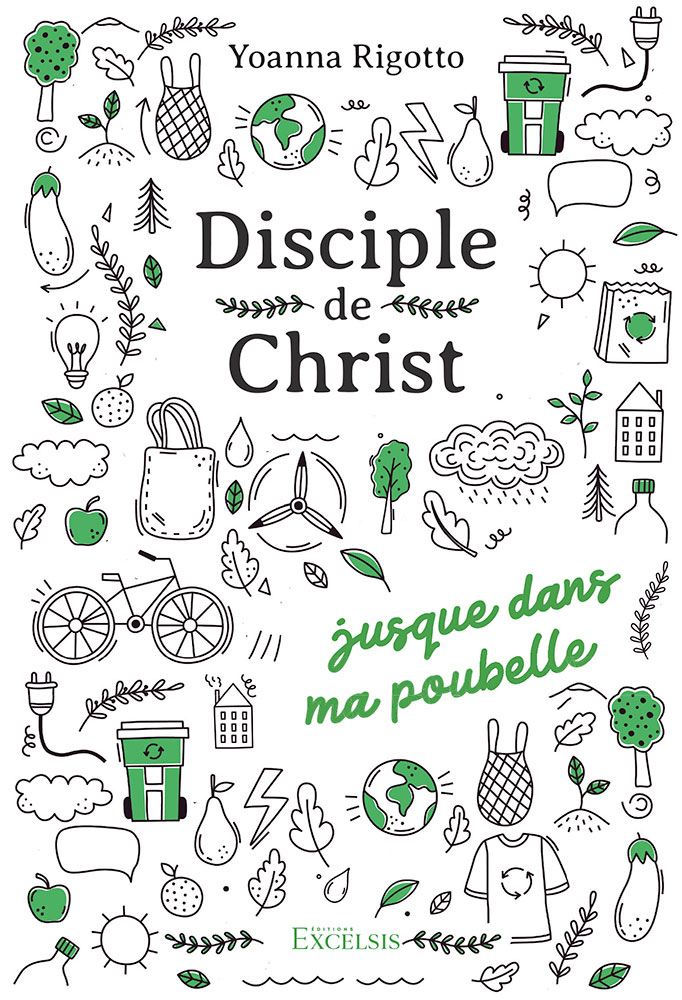
Ed. Excelsis (with A Rocha), 2023. In a world contaminated by sin and suffering from multiple ecological crises, how can the disciple of Christ make the link between his faith and ecology?
In a world contaminated by sin and suffering from multiple ecological crises, how can the disciple of Christ make the link between his faith and ecology?
Showing that the current ecological situation is a symptom of sin, this book invites its readers to re-examine every aspect of their lifestyle, even the most trivial, in the light of the Word and to make changes under God's guidance. With a better understanding of the ecological consequences of our lifestyles, we can adjust our behaviour and habits to better respect creation. Food, cosmetics, waste, consumption, fashion, digital technology, collective action... Numerous practical suggestions are given for making an ecological transition driven by our Christian faith and guided by biblical principles.

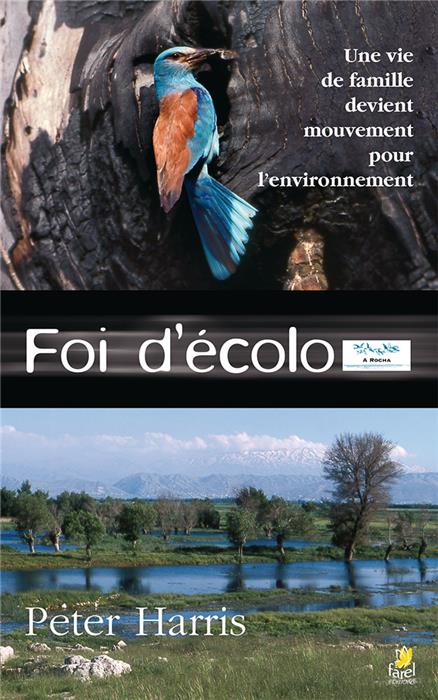
Ed. Farrel, 2005. The story of how A Rocha was founded by a couple of British missionaries in Portugal.
Peter Harris offers us a story full of twists and turns, humour and lessons. And he takes us on a journey! He tells the story of how he went from being a pastor in the north of England to running a nature conservation centre in southern Portugal.
The creation and management of this centre is above all a wonderful human adventure. With its ups and downs, the Harris family has created a living space based on the values of the Gospel. It is a model of openness to others, of acceptance without discrimination and of trust despite the difficulties.
But the interest of such a book also lies in the author's deepest motivations. He shows us that a sincere faith does not lead to isolation. On the contrary, it implies a responsible attitude towards our environment. It knows how to commit to both human development and respect for the beauty of a site.
This book, a subtle blend of fascinating narrative and pragmatic reflections on the protection of nature, will delight lovers of good stories and all those who seek to develop a harmonious life with their surroundings and nature.
Peter Harris is an Anglican minister. He is the founder of A Rocha, a Christian-inspired environmental protection association working in some fifteen countries. He currently lives in Provence, where he is helping to preserve the Vallée des Baux.
IVP, 16 Jul 2010. This is an autobiography that shows that, with conviction, it is possible to change the destiny of a part of our planet that has been corrupted by human activity.
In 1993, Dave Bookless was appointed pastor of the Anglican Church in Southall, West London. Having been made aware of ecological issues by the NGO A Rocha, he wanted to create a reference point for the ecological cause in the UK. He became interested in an open-air landfill site on the outskirts of his parish. In this area, which is much sought-after by property developers, there are burnt-out car bodies, rubble of all kinds, faulty major household appliances, etc.
Convinced that this 36-hectare area could become a haven of peace for the surrounding wildlife and population, our pastor urged the local authorities to turn it into a public park. Opened in the summer of 2003, the Minet Park is now a place of rest and an introduction to ecology for a population from a disadvantaged suburb. It has also become a place where biodiversity has been able to reestablish itself!
This is an autobiography that shows that, with conviction, it is possible to change the destiny of a part of our planet that has been corrupted by human activity.
Dave Bookless is the theological director of A Rocha International.
Ne manquez rien : Abonnez-vous à notre newsletter !