
Half of France’s mountain forests and Corsica threatened by climate change, according to France’s Red List of Ecosystems.
Our activities and climate change are impacting the world’s biodiversity at different scales, leading to a loss of diversity within ecosystems and a collapse in flora and fauna populations. But just how threatened are the ecosystems around us by climate variations and our use of the land? In France, mountain forest ecosystems are among the most vulnerable. The International Union for Conservation of Nature (IUCN) studies the state of the world’s biodiversity. One of its angles concerns ecosystems and the assessment of their risk of collapse. A study has been carried out on mountain forest ecosystems in France, and the rest of this article presents the results as well as possible courses of action.
Mountain forest ecosystems under threat
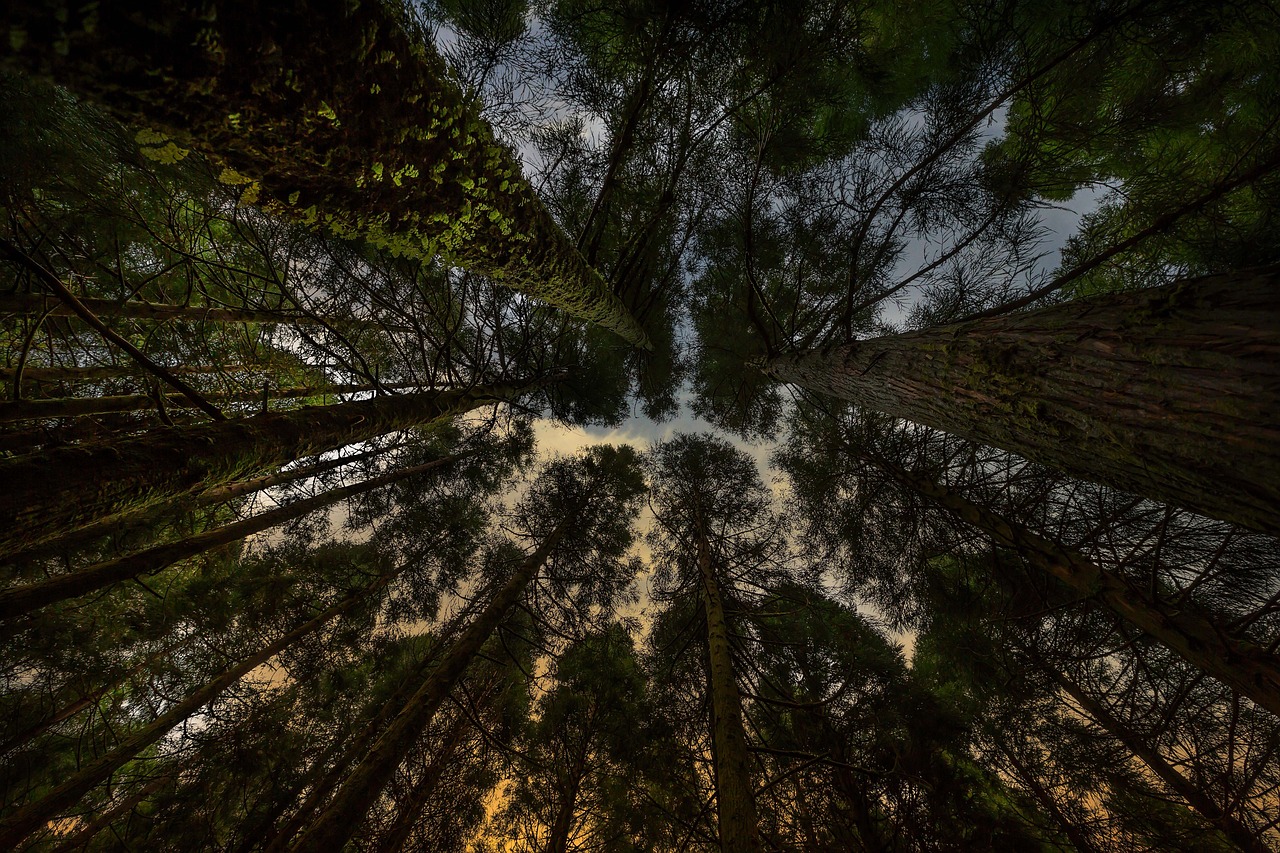
The IUCN study concluded that of the 19 ecosystems described and assessed according to the Red List criteria, 10 are classified as “threatened” and 6 as “near-threatened”.
The Red List of Ecosystems is an assessment method that aims to estimate the risk of ecosystem collapse according to scientifically established standards. Thanks to this method, it is possible to identify threatened ecosystems and the dynamics of degradation. The list is also a tool to facilitate the development of conservation strategies.
An ecosystem comprises a physical environment, its characteristics (nature of the rocks, climate, etc.) and all the living communities that live in it (fauna, flora, fungi, micro-organisms, etc.). Its functioning is based on the relationships between the physical environment and living beings, as well as the interrelationships between different species. All these interactions within the ecosystem help to create conditions favorable to the life and maintenance of the various living beings that make it up. An ecosystem is dynamic, and can be modified as environmental conditions change, or as populations of living beings evolve.
Mountain forests, unusual environments and refuges of biodiversity
Mountain forests are forests found at high altitudes in mountain ranges. A multitude of ecosystems exist within these mountain forests in France. Three main categories have been selected for study in this report, according to the predominant species of large trees present: mixed forests of beech and silver fir, forests of silver fir or common spruce, and pine forests.
France’s mountain ranges are rich in biodiversity, and each forest ecosystem has its own environmental characteristics: climate, altitude, geology, soil type. Because of their high altitude, mountain forests are home to species that have adapted to extreme conditions and live only in specific ecosystems. Mountain forests therefore play a major role in hosting biodiversity and providing a wealth of genetic resources. They are “irreplaceable”[1] environments in terms of biodiversity. What’s more, forests also provide us with numerous services for recreation, protection against landslides and rockfalls, and timber production.
Forest ecosystems are complex, as they are the site of rich processes such as the tree cycle (sylvogenetic cycle) and important interactions between plants and soils. What’s more, the history of forests is closely linked to the history of human use of the land. As a result, despite in-depth study of mountain forests, uncertainties remain about their future. Indeed, the complexity of processes, the variability of ecosystem response to pressures, and the lack of temporal depth of available data have regularly led to the conclusion that there is a lack of data to categorize the risk of ecosystem collapse.
The study’s conclusions are therefore more indicative of a high level of uncertainty concerning the response of forest ecosystems to cocktails of pressures and the vulnerability factors that modulate their effects, than of a veritable knowledge desert.
Unprecedented upheavals marked by climate change and the legacy of land exploitation
Mountain forest ecosystems are now exposed to climatic conditions that are increasingly different from those that led to their establishment in the first place. Indeed, the trend towards higher temperatures resulting from the greenhouse effect is generally more marked in the mountains than on the plains, and is also having an impact on the quantity of water available (greater water deficit, changes in atmospheric humidity). Climate change also interacts with other types of pressure, such as atmospheric ozone pollution, the introduction of invasive exotic species, the abundance of wild ungulates, tourism development and monospecific plantation forestry. These different parameters have varying impacts on the sylvogenetic cycle, but generally lead to its shortening.
The surface areas and physiognomy of mountain forests have been, and still are, shaped by the way they have been exploited over the ages: periods of clearing, then active reforestation by plantation and finally spontaneous reforestation. Wooded areas within the same ecosystem can therefore have different physiognomies depending on how they have been exploited, and therefore evolve differently in the face of external pressures.
Promoting the resilience of mountain forests and enhancing knowledge
It is therefore essential to take action to protect mountain forests, which are key areas for the protection of our natural heritage. One line of action concerns the preservation and restoration of biodiversity and ecosystem processes to promote the naturalness of mountain forests. Another line of action is to ensure the continuity of forest monitoring programs, which enable us to gather the information we need to take effective action in response to changing conditions.
A Rocha’s work to study and protect forests
Since 2008, the A Rocha France association has been managing an estate of mountain forest ecosystems: the Domaine des Courmettes. Located in Tourrettes-sur-Loup, in the Alpes-Maritimes region, the Domaine des Courmettes covers 600 hectares of unspoilt nature. At an altitude of 850 metres, the site offers spectacular views of the Mediterranean and the Mercantour massif. Classified as a Natura 2000 site and part of the Parc Naturel Régional des Préalpes d’Azur, the estate is a unique place for conserving biodiversity and raising awareness of environmental issues.
The CNPF is currently studying the impact of herbivores on forest regeneration. The area around these oaks is protected by natural barriers to prevent trampling by the public using the estate’s paths. Signage will also be installed to raise public awareness of the importance of senescent trees.
To conclude
Each ecosystem has its own importance and reacts in its own way to the pressures it faces. These studies on mountain forest ecosystems show us the importance of taking action to ensure their future, as they are home to unique biodiversity and incredible species. Their state of collapse is subject to change, and it is difficult to predict exactly how, but the implementation of restoration and monitoring actions will ensure that they are safeguarded in the best possible way.
As individuals, we too can play a part in protecting these ecosystems, which are part of our heritage. We can identify the mountain forests close to us, take an interest in them and perhaps even participate in their conservation. After all, protecting our forests means preserving biodiversity and combating climate change.
Further information
This article contains a summary of the results of La Liste rouge des écosystèmes en France – Les forêts de montagne, Hexagone et Corse published in 2025 by: the French Committee of the International Union for Conservation of Nature (IUCN), the French Biodiversity Office (OFB), the National Museum of Natural History (MNHN) in partnership with the National Botanical Conservatories (CBN) and the National Institute of Geographic and Forestry Information (IGN).
“Chaleur humaine” podcast , episode Comment sauver les forêts françaises ?
[1] According to the French National Inventory of Natural Heritage (INPN)